

Data Quality
VHIE Collaborative HRO CORE Presentation

Interview with Sandi Mitchell, Claire English & Gay Stahr By Kayla Krawzyk Special Feature for the JPSys Pulse Newsletter reprinted for our blog. Sandi Mitchell and the Clinical Data Quality Team focused on VA’s Journey to become a High Reliability Organization (HRO). Excitement rose when J P Systems, the VHIE Analytics and the VHIE CCDA…
Read MoreNursing Workflows and the Importance of Data Quality

By Teresa Saxon, R.N. Introduction Healthcare data quality analysis has many layers of complexity ranging from discovery of anomalies to how they are repaired. In simplified terms, poor data quality can be characterized by missing, miscoded or misplaced data in a patient’s record. Data quality is especially important in the nursing field. Nurses interact with…
Read MoreThe Importance of Immunization Reporting

Vaccination records (sometimes called immunization records) provide a history of all the vaccines a patient has received. These records are important as they may be required for jobs, travel, or school. Immunization records are compiled by a patient’s medical providers. They consolidate vaccinations and report them to Immunization Information Systems (IIS). IIS’s are usually run…
Read MoreJ P Systems Wins 120 M VA Terminology Services Support Recompete

FOR IMMEDIATE RELEASE: Clifton, VA – June 28, 2021, J P Systems, Inc., JPSys, received notification of a U.S. Department of Veterans Affairs recompete contract award. This single award, Indefinite Delivery, Indefinite Quantity (IDIQ) contract for clinical terminology standards services has a ceiling of $120 million. The contract includes a base 5 year period from…
Read MoreThe Importance of High Quality Data for AI Reliability

Garbage in = Garbage Out = High Risk By Lindsay Westervelt J P Systems, Inc. Artificial Intelligence (AI) is a hot topic right now in healthcare for numerous reasons. Namely, AI has the potential to reduce clinical burnout and fatigue by improving Clinical Decision Support. AI uses Machine Learning to create predictive logic and “act”…
Read MoreKeeping Everyone in the Know: New CMS ADT Rule
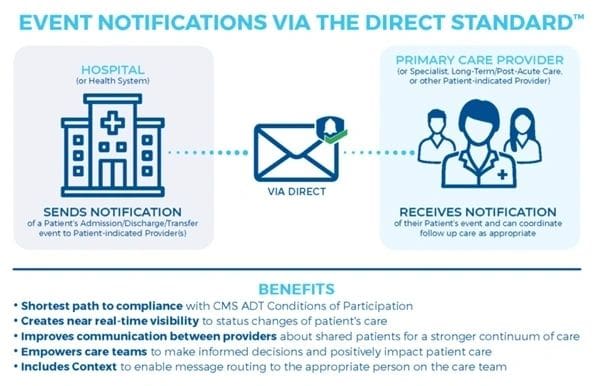
Author: David C. Kibbe, MD On March 9, 2020, the Centers for Medicare & Medicaid Services (CMS) issued the Interoperability and Patient Access Final Rule aimed at enhancing interoperability and increasing patient access to health information. This Final Rule contains a new Condition of Participation (CoP) that requires all hospitals, psychiatric hospitals, and Critical Access Hospitals to electronically share (via an…
Read MoreThe Importance of a Nursing Data Framework

By Dr. Luann Whittenburg, RN, PMP, FHIMSS A Nursing Data Framework can give healthcare providers a way to garner business intelligence. They can save money and reduce risk by improving workflows, load leveling personnel schedules, and improving patient safety. With more than 4 million nurses in the U.S., nurses are the largest clinical segment of the U.S.…
Read MoreData Has to Move at the Speed of Care!

In Healthcare IT, clinical data needs to move! Electronic Health Record systems (EHRs) need to send data both internally, such as other domain-focused applications like the Blood Bank, PACS System, Nurse Staffing, Sepsis Management, Respiratory, Wound Care, and Fetal Monitoring and and externally to another provider or the CDC. If your EHR can’t effectively exchange data within…
Read MoreReduce Risk & Fiduciary Exposure using Electronic Data Exchange

The WHO reports patient harm as the 14th leading global disease burden, with 42.7 million adverse events occurring during hospitalizations. A 2018 scientific study revealed a 100% error rate in incoming Consolidated Clinical Document Architecture (C-CDA) data, which is alarming. Are these errors critical, like missing life-threatening allergy data, or minor, such as empty fields…
Read More